The future begins with the way we are born.
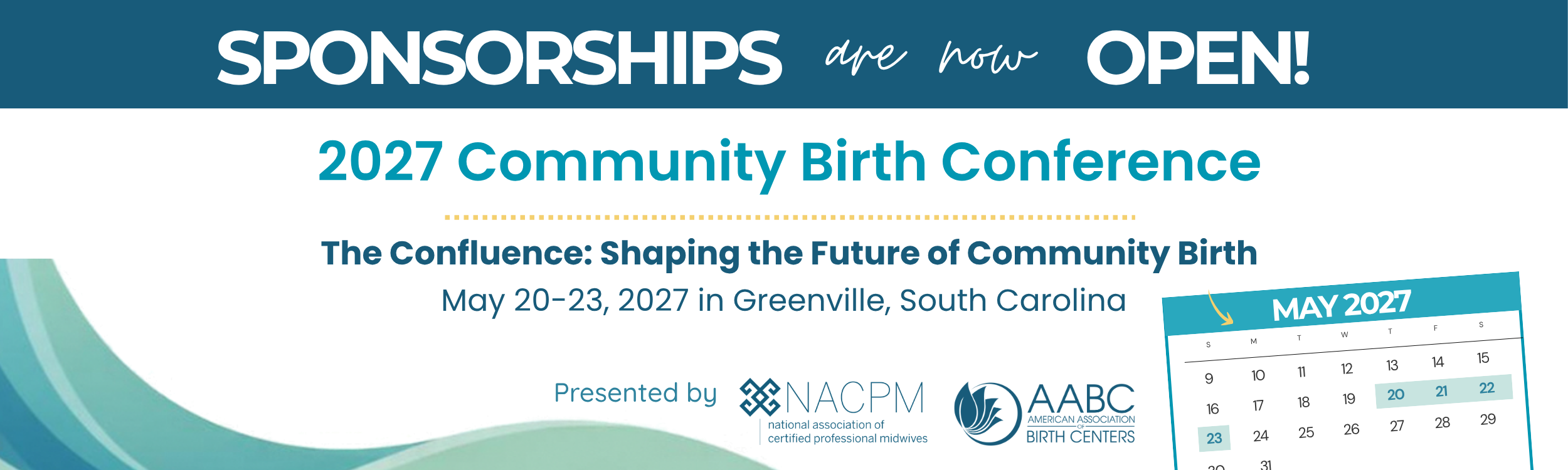
The National Association of Certified Professional Midwives (NACPM) is the membership organization representing Certified Professional Midwives (CPM) in the United States. Certified Professional Midwives provide unique and critical access to normal physiologic birth, profoundly benefitting childbearing people and their newborns. Founded in 2000, NACPM ensures a powerful, collective voice for Certified Professional Midwives. NACPM directs its influence toward improving outcomes for all childbearing people and their infants, investing in a strong racially, ethnically, and socially representative CPM workforce, and helping to drive urgently needed changes in the systems that care for birthing people in the U.S. today.
The word “advocacy”, while by definition encompasses an action, can mean many things to different people. I would like to speak to the intention of the why perinatal advocacy is critical to the improvement of perinatal health disparities, and highlight examples of how you can step in, too.
On the plane to Washington, I read bell hooks. Her essay Killing Rage met me where I was. She writes about the particular fury that lives in the body of the oppressed. The rage that we are taught to swallow, to soften, to share only at home among our own. She asks a question I have been turning over ever since: can rage, when connected to our passion for justice, be healthy? Can it heal?
We have asked politely. We have asked strategically. We have asked in legal terminology and legislative language.
Community-based midwives in Georgia have been asking for licensure since 1991. Initially the state of Georgia said “No”, stating that the maternal mortality rate would surely go up. Unfortunately, that rate did go up because midwives were not accessible.
“It is always our goal to make teachers of our students.”
In 2016, less than two years into my independent midwifery practice, I began apprenticing with the Dakota master quillwork artists David and Merna Lewis. The pair had spent years revitalizing the art: learning from their own elders, looking at old books, combing through museum archives, trying to figure out how certain techniques were done by our ancestors. In other words, they had done a lifetime’s worth of revitalization work so that their students wouldn’t have to. So that their students could go farther than they had.

Too many women still die from preventable causes during pregnancy and childbirth. Skilled care before, during, and after birth can save lives — and midwives are best placed to provide it. Achieving universal coverage of midwife-delivered interventions by 2035 could avert 67% of these deaths. But, the world is short one million midwives. We need urgent action to grow, support, and sustain the global midwifery workforce. This #IDM2026, sign the global petition calling on policymakers for #OneMillionMore